


Engineered Trench Protection: ESC Aluminum Trench Boxes Are Critical for Safe & Compliant Excavation
Trench excavation remains one of the highest-risk activities in civil engineering and infrastructure construction, as consistently documented in global safety data and OSHA-backed studies. Industry reports indicate that trench collapses (cave-ins) are the leading cause of fatalities in excavation work, with catastrophic failure occurring rapidly and often without warning.
OSHA data shows that 39 workers were killed in trenching and excavation incidents in 2022 alone, representing a sharp increase compared to previous years. Over the long term, construction accounts for approximately 85% of all trenching-related fatalities, highlighting the sector’s exposure to excavation hazards. Furthermore, research indicates that trenching operations can be over 100% more hazardous than general construction activities, with cave-ins exerting extreme loads—where even a small volume of soil can apply hundreds to thousands of kilograms of force, leading to fatal compression or suffocation within minutes.

Despite being highly preventable through engineered controls such as sloping, shoring, and shielding, these incidents continue to occur, reinforcing the critical need for properly designed trench protection systems in modern excavation practice.
To mitigate these risks, engineered trench protection systems—specifically aluminum trench boxes (trench shields)—are widely adopted to ensure structural stability and safety compliance across diverse ground conditions and project environments.
Geotechnical Risks in Trenching Operations
From an engineering perspective, trench instability is driven by several geotechnical factors:
Lateral earth pressures acting on unsupported trench walls
Soil stratification variability (cohesive vs. cohesionless soils)
Groundwater ingress and hydrostatic pressure buildup
Surcharge loads from adjacent structures, equipment, or traffic
Dynamic loading from vibration and construction activities
Without proper support systems, these forces can exceed soil shear strength, leading to sudden wall failure or progressive collapse.
Structural Function of Aluminum Trench Boxes
Aluminum trench boxes function as protective shielding systems, not active shoring. Their primary engineering role includes:
Resisting lateral soil movement through rigid panel structures
Transferring applied loads to spreader systems
Maintaining a safe void space for worker access
Preventing soil ingress into the work zone
Unlike hydraulic shoring systems, trench boxes rely on structural resistance and geometric stability, rather than applying counter-pressure to trench walls.
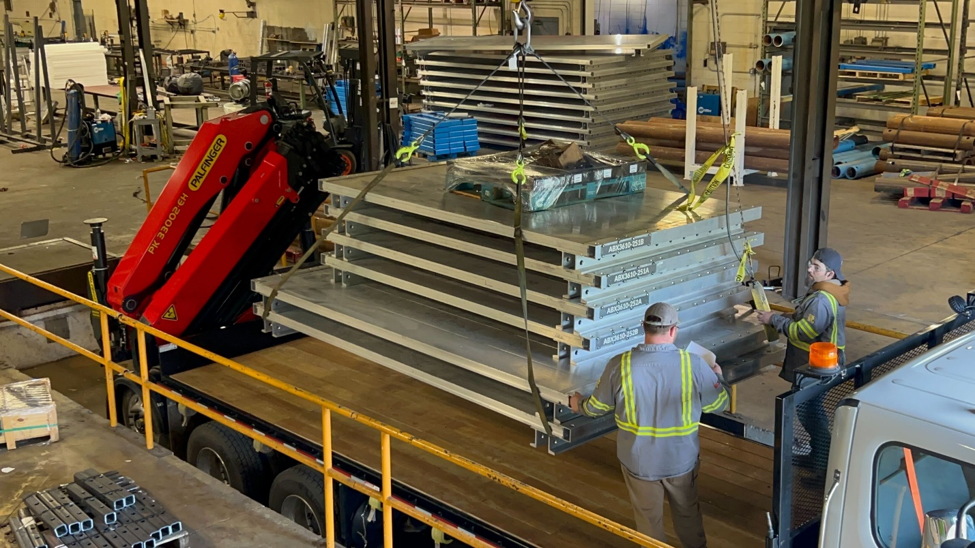
Engineering Advantages of ESC Aluminum Trench Box Systems
1. High Strength-to-Weight Ratio Optimization
ESC aluminum trench boxes are fabricated using structural-grade aluminum alloys, delivering:
Excellent strength-to-weight performance
Reduced lifting loads for installation equipment
Improved handling in constrained or urban environments
This enables safer and faster deployment without compromising structural integrity.
2. Load Distribution & Structural Integrity
The system is engineered to manage:
Uniform and non-uniform lateral earth pressures
Load transfer through reinforced sidewalls and spreader configurations
Resistance to localized stress concentrations
Trench depth
Soil type and classification
Surcharge conditions
Safety factors consistent with international standards
3. Modular Design for Configurational Flexibility
ESC trench box systems incorporate:
Adjustable spreaders for variable trench widths
Panel combinations for different depth requirements
Stackable configurations for deeper excavations
This modularity allows engineers and contractors to design systems tailored to site-specific geotechnical conditions.
4. Installation Efficiency & Operational Performance
From a construction engineering standpoint, ESC systems improve operational efficiency by:
Reducing installation time compared to traditional shoring
Enabling rapid repositioning along linear trench alignments
Minimizing excavation downtime
This contributes to optimized project sequencing and reduced labor costs.
5. Corrosion Resistance & Material Durability
Aluminum provides inherent resistance to:
Oxidation and corrosion in aggressive environments
Degradation in marine, coastal, or high-moisture conditions
This ensures long-term durability, particularly for projects involving:
High groundwater tables
Coastal infrastructure
Repeated system utilization across multiple sites

Application in Global Infrastructure Projects
ESC aluminum trench boxes are engineered for use across a wide range of civil and infrastructure applications, including:
Utility trenching systems (water, sewer, telecommunications, electrical)
Pipeline installation projects (oil, gas, and energy sectors)
Transportation infrastructure (roadworks, drainage systems)
Urban excavation and confined space works
Their adaptability ensures consistent performance under varying geotechnical and environmental conditions globally.
Alignment with International Safety & Engineering Standards
While specific regulatory frameworks differ by region, trench protection systems must adhere to core engineering principles:
Prevention of soil collapse through structural protection
Safe access and egress within excavation zones
Compliance with excavation depth and load-bearing criteria
Incorporation of appropriate safety factors
ESC trench box systems are developed to align with:
Recognized international excavation safety guidelines
Industry best practices in temporary works design
Engineering-based approaches to trench protection and risk mitigation
Engineering Value of ESC Trench Safety Solutions
ESC delivers trench protection systems backed by:
Engineering design validation based on real-world load cases
Consistent manufacturing quality and material performance
Technical support for system selection and configuration
Global project experience across diverse soil and site conditions

Conclusion: Engineering Safer Excavations with ESC

The use of aluminum trench boxes is not merely a safety measure—it is a critical engineering control that ensures trench stability, protects personnel, and maintains project continuity.
By integrating structural performance, modular adaptability, and durability, ESC aluminum trench boxes provide a reliable solution for meeting the demands of modern excavation projects worldwide.
Discuss Your Project with Our Engineering Team
Ensure your trenching operations are safe and supported by proven, engineered systems.